Cart
Your cart is empty


A damp basement is more than just an inconvenience—it can damage your home’s foundation, encourage mold growth, and create long-term air quality problems. Because basements sit below ground level, they naturally absorb moisture from surrounding soil and concrete walls. Over time, this leads to persistent humidity, musty odors, and even structural deterioration.
👉 The most effective solution is choosing the right basement dehumidifier—and installing it correctly based on your drainage conditions.
Basements are one of the most moisture-prone areas in any home:
| Cause | Result |
|---|---|
| Concrete wicking moisture from soil | Constant humidity source |
| Poor air circulation | Moist air gets trapped |
| Temperature differences | Condensation on walls and pipes |
| Plumbing leaks or seepage | Hidden long-term moisture sources |
👉 Related guide: how to dehumidify a basement effectively
Common risks of high humidity:
✔ Ideal basement humidity: below 50% RH

The best dehumidifier depends on square footage + moisture severity + drainage conditions.
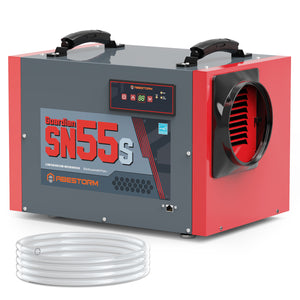
Size For: 1,300 Sq.Ft
Drainage: Gravity
Capacity: 120 (Sat) | 55 (AHAM) PPD

Size For: 2,600 Sq.Ft
Drainage: Gravity
Capacity: 198 (Sat) | 90 (AHAM) PPD
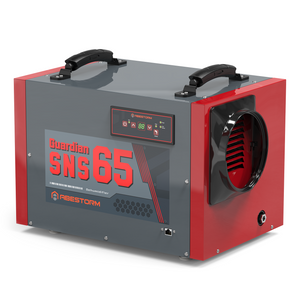
Size For: 1,300 Sq.Ft
Drainage: Water Pump
Capacity: 120 (Sat) | 55 (AHAM) PPD
👉 Rule of thumb:If you are unsure between two models, always choose the larger capacity for basements.
| Drain Type | How It Works | Best For |
|---|---|---|
| Gravity Drain | Water flows downward to floor drain or sump pit | Simple basement setups |
| Gravity Drain | Pumps water upward or sideways up to 19.6 ft | Flexible installations |
👉 Use a pump model if:
👉 Use gravity drain if:
💡 Pro tip: If you're unsure, choose a pump model—it gives maximum installation flexibility.
Proper installation can significantly improve performance.
Drainage setup:
Dehumidifier placement:
👉 Related guide: how to clean a dehumidifier for long-term performance
Case Study 1 – Finished Basement (1,500 sq ft, Midwest US)
👉 Key reason for success:
Gravity drain worked because sump pit was already available.
Case Study 2 – Unfinished Basement (2,200 sq ft, Southeast US)
👉 Key reason for success:
Pump system enabled installation without structural modification.
1. What size dehumidifier do I need for my basement?
Choose based on square footage and moisture level. Up to 1,300 sq ft with light moisture → SN55S (gravity). Up to 2,600 sq ft with moderate to high moisture → SN90 (gravity). Up to 3,300 sq ft or wet basements without a floor drain → SNS120 (pump). When in doubt, always choose the larger capacity.
2. Do I need a pump dehumidifier or is gravity drain enough?
Use a pump model if you lack a floor drain, need to drain upward to a sink or outside, or have a finished basement. Stick with gravity drain if you already have a nearby floor drain or sump pit. If you're unsure, choose a pump model for maximum flexibility.
3. How long does it take to dehumidify a basement?
Typically 24 to 72 hours to drop from 70%+ RH down to below 50%. Run the unit continuously for the first 48 hours for best results. Larger or wetter basements may take up to a week for full stabilization.
4. Will a dehumidifier remove musty smells completely?
Yes, if high humidity is the root cause. A dehumidifier stops new mold growth and dries out existing moisture sources. If the smell persists after 7 days, check for hidden leaks or standing water.
5. How much electricity does a basement dehumidifier use?
Most Guardian models use 400 to 700 watts at peak operation. Estimated daily energy cost is $0.65 to $1.30 based on 8 to 10 hours of runtime. Use the built-in humidistat to auto-cycle and save energy.
6. Can I use a crawl space dehumidifier in a basement?
Yes. Guardian dehumidifiers are designed for both crawl spaces and basements, with continuous-duty operation and a temperature range of 41°F to 95°F.
7. Do I need to run my basement dehumidifier all the time?
Not necessarily. Set your target humidity to 50% RH and use auto-mode — the unit runs only when needed. In very wet basements, run continuously for 24 to 48 hours first, then switch back to auto-mode.
8. Will a dehumidifier work in a cold basement (below 55°F)?
Yes, but efficiency drops. Guardian models operate down to 41°F, but below 55°F coils may freeze. If your basement stays consistently below 55°F, consider a low-temperature dehumidifier
A properly sized dehumidifier is the most effective way to protect your basement and home foundation.
✔ Moderate moisture → SN55S or SN90
✔ Heavy moisture or no drainage → SNS120 (pump model)
✔ Best long-term strategy → Keep humidity below 50% RH
👉 If you are unsure, choose a pump model—it gives the most flexibility and installation freedom.