Cart
Your cart is empty


Water damage spreads fast—and the clock starts immediately.
A burst pipe, flood, or appliance failure can saturate a building within minutes. Within 24–48 hours, mold growth begins, and structural materials like drywall, wood, and insulation start absorbing water deep inside.
👉 That’s why professional restoration focuses on one thing first:
rapid structural drying + airborne contaminant control To do that effectively, you need a system of: High-capacity dehumidifiers HEPA air scrubbers Negative air machines for containment
The first 48 hours determine whether a property can be fully restored or suffers permanent damage.
| Factor | Why It Matters |
|---|---|
| Mold growth | Can begin within 24–48 hours |
| Material absorption | Wood, drywall, insulation retain deep moisture |
| Secondary damage | Warping, structural weakening, odor contamination |
👉 Related standard : IICRC S500 water damage restoration guidelines
Restoration goals:

Residential units cannot handle flood-level moisture.
You need high-capacity restoration dehumidifiers designed for extreme saturation conditions.
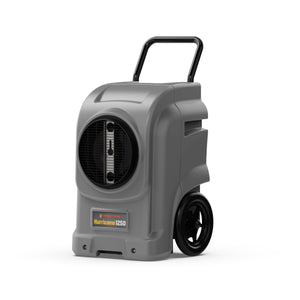
Size For: 3,000 Sq.Ft
Drainage: Water Pump
Capacity: 270 (Sat) | 125 (AHAM) PPD
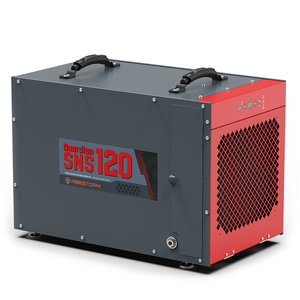
Size For: 3,300 Sq.Ft
Drainage: Water Pump
Capacity: 235 (Sat) | 120 (AHAM) PPD
Floodwater releases:
Mold spores
Bacteria
VOCs from damaged materials
👉 Air scrubbers prevent these from spreading during drying.

Coverage: 1100 Sq.Ft
Airflow: 750 CFM
Filter: MERV-10 + 2-in-1 HEPA/Carbon
UV-C: Yes

Coverage: 2500 Sq.Ft
Airflow: 2000 CFM
Filter: MERV-10 + HEPA 13
UV-C: Yes
✔ Why it works:Captures 99.97% of particles down to 0.3 microns, including mold spores and bacteria.
These two systems are often confused—but serve different roles.
| System | Function | When to Use |
|---|---|---|
| Air scrubber | Cleans and recirculates air | Open-area drying |
| Negative air machine | Creates containment pressure | Contaminated zones |
When Negative Air Machines Are REQUIRED:
Restoration goals:
👉 Without containment, contaminated air can spread to clean areas within hours.

| System | Function | When to Use |
|---|---|---|
| Air scrubber | Cleans and recirculates air | Open-area drying |
| Negative air machine | Creates containment pressure | Contaminated zones |
Air scrubber placement:
| Step | Action | Equipment |
|---|---|---|
| 1 | Water extraction | Pumps, wet vacs |
| 2 | Containment setup | Plastic barriers + negative air |
| 3 | Dehumidification | Hurricane / Guardian units |
| 4 | Air filtration | HEPA scrubbers |
| 5 | Monitoring | Moisture meters |
| 6 | Final drying verification | Hygrometers |
Run equipment continuously for the first 72 hours minimum. ✔ Drying is complete when: Wood moisture < 16% Relative humidity < 50% for 24 hours
👉 Use a pump model if:
👉 Use gravity drain if:
💡 Pro tip: If you're unsure, choose a pump model—it gives maximum installation flexibility.
How long does water damage restoration take?
Typically 3–5 days for most residential flooding. Severe cases may take 7+ days.
Can I use a regular dehumidifier for flooding?
No. Residential units cannot handle saturation-level moisture.
Do I need both air scrubbers and dehumidifiers?
Yes. One removes moisture, the other removes airborne contaminants.
What is a negative air machine used for?
It creates containment zones to prevent contaminated air from spreading.
How many air scrubbers do I need?
1 per 1,000–2,000 sq ft in containment areas
Water damage restoration is a time-critical process where equipment selection directly impacts recovery success.
✔ Dehumidifiers remove structural moisture
✔ Air scrubbers clean contaminated air
✔ Negative air machines prevent cross-contamination
👉 For severe flooding, the combination of Hurricane 1250 + HEPA 2000 UVIG delivers the fastest and most reliable drying performance.