


These days, there’s a huge focus on having energy-efficient, green buildings. However, even these buildings have problems with humidity. That’s why it’s important to pay a lot of attention to things like humidity levels as much as you can. Implementing the right systems to help you deal with humidity will help quite a bit, and it will surely streamline things in a more cohesive and professional manner. Here’s what you need to consider when it comes to eco dehumidification and how to approach it.
Green building trends and humidity control needs
It makes a lot of sense to have humidity control even in the case of green buildings. And that’s mainly because a high humidity level will reduce the efficiency of your HVAC unit. On top of that, moisture will lead to mold, and that is going to harm the indoor quality, which is something to focus on.
As for sustainability-driven humidity challenges, there can be plenty of them. Simply put, you can have airtight envelopes that will prevent heat loss, which is a known issue. Windows and sealing can also be ineffective in some cases, and insulation might not work the way you want. Making sure that these systems are tackled with in a way that’s appropriate, simple things like that will help more than expected and you will have inherent value coming from that a lot faster than you might expect.
How do traditional dehumidifiers waste energy?
A traditional dehumidifier is wasting energy because it runs non-stop. And naturally, running 24/7 will end up being problematic in more ways than expected. Not only that, but the sheer fact of having inefficient compressors and coils will end up being a problem a whole lot more than you might expect.
Additionally, some of the traditional dehumidifiers end up having a poor defrost system. The frost buildup is going to lead to things like reduced water extraction, more energy consumption, along with shortening the lifespan of the equipment and increasing the energy consumption overall. You want to try and avoid any waste when it comes to energy, and that alone is a thing that you can start addressing much faster than expected.

New tech you can start using
The great thing about technology is that it continues expanding and it pushes the limits when it comes to value and consistent results. That being said, you also want to think about the inherent challenges these technologies can bring to the table.
- Low grain refrigerant is a great technology that can help remove moisture effectively, and it performs great even if you have high humidity levels. It keeps a stable performance and it uses heat exchange where necessary. That’s great for eco dehumidification, since it can do up to 40% more water extraction for each consumed kWh.
- Eco-friendly refrigerants are super effective and they offer a lower global warming potential, they bring in excellent heat transfer efficiency, and the compressor performance is really good as well, something to keep in mind.
- Plus, things like smart modes and automation can be great, too. You get low-power and sleep modes, along with humidity tracking sensors, app-based remote monitoring and variable speed fans, all of which can be super handy and dependable, too.
It’s a very good idea to try and implement these solutions because they will help improve your green building humidity control. With that in mind, they might not always fit your requirements, so you do need to approach this with the utmost focus. Once you do that, things will be easier to handle, and you will like the results a whole lot more.
How to design a sustainable humidity control plan?
The great thing about establishing a humidity control plan is that you can make it sustainable. However, even if it’s a multi-step plan, it can be inherently powerful and super useful. It comes down to how you are managing it.
- The first thing you want to do is to study the moisture load and figure out a way to get rid of that effectively and in a proper manner.
- After that, you can set the target humidity and usually that should be from 40% to 55%, something to keep in mind.
- Focus on improving the ventilation and airflow, because all that stuff is going to matter a lot more than expected.
- Then, you integrate a dehumidifier, and ideally you want to go for an energy-efficient model if you can.
- After you do that, you want to use zonal control. Define multiple humidity zones and then it will be easier to manage everything, while still being able to keep everything under effective control every time.
- Lastly, you need to monitor and optimize everything. Stuff like sensors as well as IoT monitoring can help quite a lot.
Abestorm’s energy-efficient product features
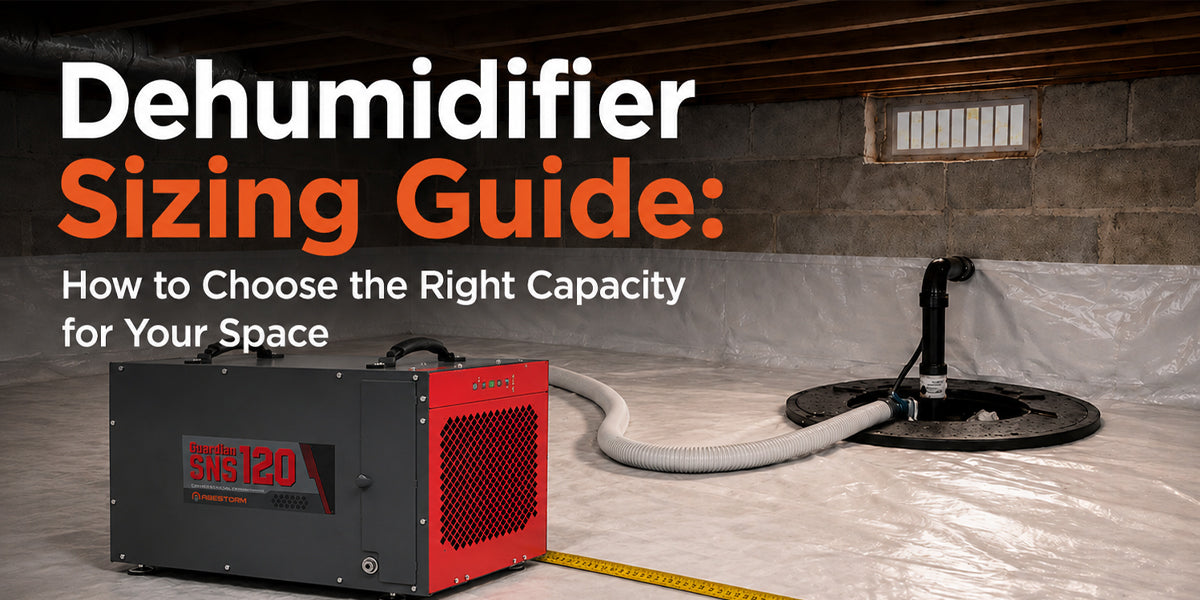
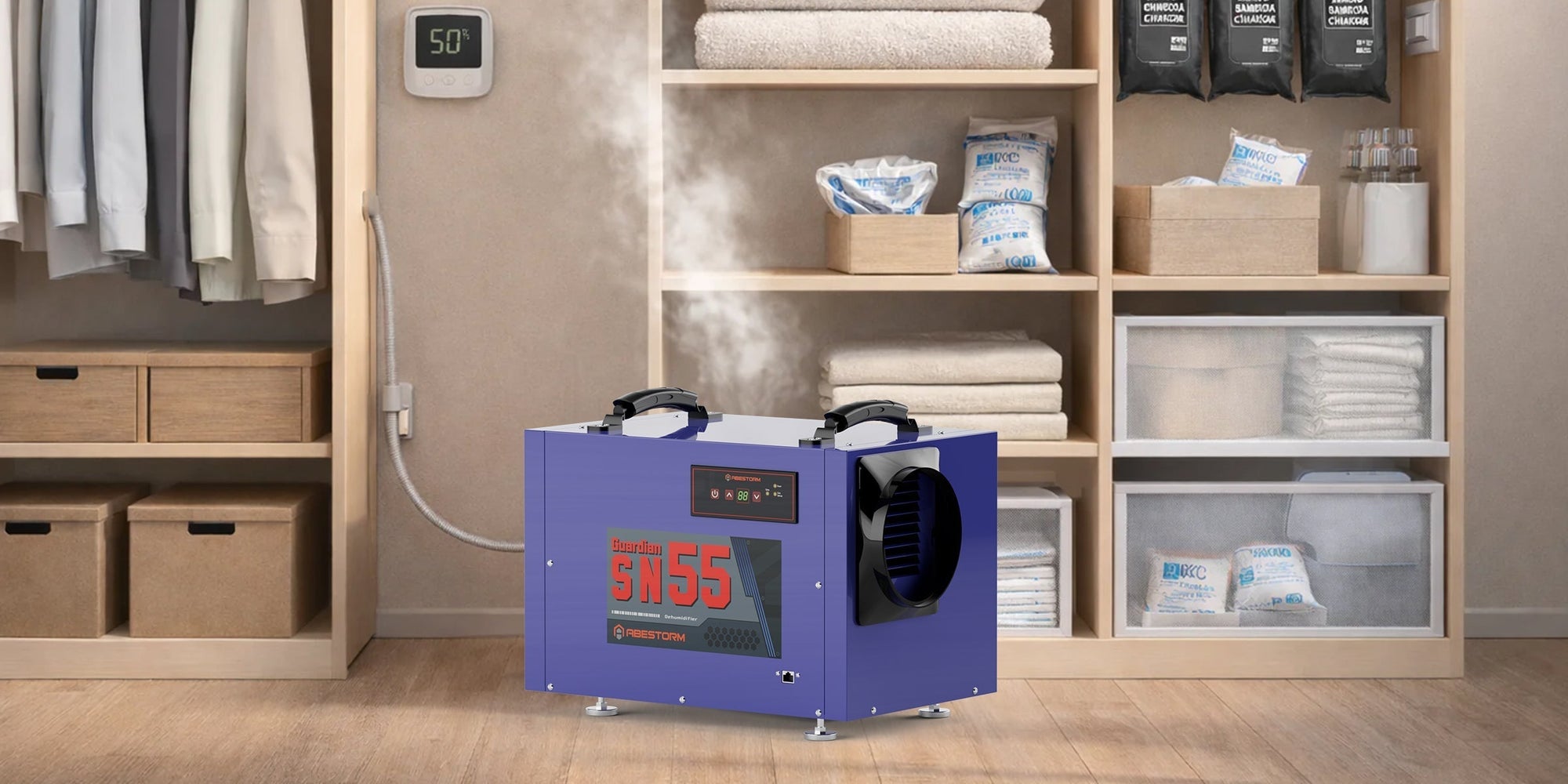
Abestorm has a multitude of models that are eco-friendly, like the Guardian SN35P and 55S, but also the Guardian SNS65 that’s great for basements or the Guardian SN90 which is great for large homes and commercial applications. The Hurricane series is exceptional for advanced eco dehumidification.
These models come with extensive features, including high efficiency heat exchangers and coils, the LGR technology, along with eco-friendly refrigerants. On top of that, you have the auto mode and smart humidity controls, not to mention low-temperature control in case you are living in a mixed climate.
Step-by-step guide to greener dehumidification
Proper dehumidification will require adequate planning, and here’s a quick checklist to help with that:
- Measure the current RG, in which case you want to use a smart hygrometer
- Additionally, you want to fix leaks, seal gaps and use fans at the source
- After that, you should consider improving the natural ventilation, something you can do with ERVs, passive vents and just opening the windows
- Select an energy-efficient dehumidifier that has features like an eco-refrigerant, the LGR technology, an automatic mode, high-extraction effectiveness and so on.
- In order to install for maximum performance, keep the right clearance and use some vibration-dampening pads. You can also connect it to a humidity sensor, too.
- Lastly, you automate and monitor everything. And of course, it also requires maintenance like cleaning the filters, checking the sensor accuracy and inspecting drain lines.
Closing thoughts
Abestorm is here to assist with a great energy-efficient dehumidifier solution to fit your needs. Once you get a reliable, eco-friendly dehumidifier and implement the tips shown above, it will be much easier to handle and manage everything. Yes, it can be challenging, but the results will be excellent in the end!
Shop For Dehumidifier
Abestorm 180 PPD 2,300 Sq.Ft Commercial Dehumidifier with Pump and Drain Hose | Hurricane LGR85
Abestorm 190 PPD 2,600 Sq.Ft Commercial Dehumidifier with Pump and Drain Hose | Hurricane 900
Abestorm 170 PPD 2,100 Sq.Ft Commercial Dehumidifier with Pump and Drain Hose | Hurricane 800
Abestorm 180 PPD 2,300 Sq.Ft Commercial Dehumidifiers with Pump and Drain Hose | Hurricane 85P