Cart
Your cart is empty


Crawl spaces often stay damp even when the rest of your home feels dry.
Because they sit directly above soil and usually have limited airflow, moisture can easily build up underneath your home. Over time, this can lead to mold growth, wood rot, musty odors, and even structural damage.
Which works better in wet crawl spaces: Fans or dehumidifiers?
👉 In most cases, the right solution comes down to one decision:
Crawl spaces naturally trap moisture due to their environment:
| Cause | Result |
|---|---|
| Moisture rising from soil | Constant humidity source |
| Limited or no airflow | Moist air gets trapped |
| Temperature differences | Condensation on walls and pipes |
👉 You can also read more about crawl space wood moisture risks in our maintenance guide.
Common problems caused by excess moisture:
Mold can begin developing when humidity stays above 60%.

If your crawl space is sealed or encapsulated, a dehumidifier is the most effective solution. Unlike airflow systems, dehumidifiers actively remove moisture from the air, keeping humidity stable year-round.
Use a dehumidifier if:
Key advantages:
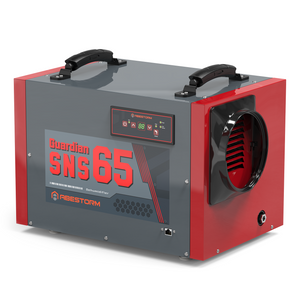
Size For: 1,300 Sq.Ft
Drainage: Water Pump
Capacity: 120 (Sat) | 55 (AHAM) PPD

Size For: 2,600 Sq.Ft
Drainage: Water Pump
Capacity: 198 (Sat) | 90 (AHAM) PPD
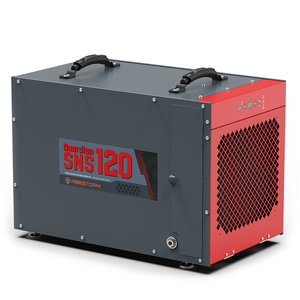
Size For: 3,300 Sq.Ft
Drainage: Water Pump
Capacity: 235 (Sat) | 120 (AHAM) PPD
✔ Result: Stable humidity below 50%, protecting structural wood and indoor air quality.
If your crawl space is already vented, a ventilation fan can help improve airflow and reduce moisture levels. However, ventilation works best only in dry or moderate climates.
Use a ventilation fan if:
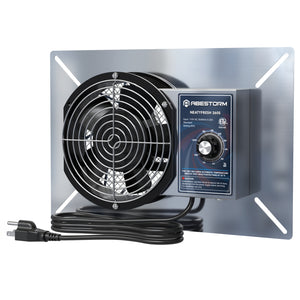
Coverage: 500 Sq.Ft
Airflow: 260 CFM

Coverage: 900 Sq.Ft
Airflow: 540 CFM

Coverage: 1200 Sq.Ft
Airflow: 720 CFM
✔ Tip: Ventilation fans help exchange air, but they do not remove moisture directly.
| Factor | Dehumidifier | Ventilation Fan |
|---|---|---|
| Best for | Sealed crawl spaces | Vented crawl spaces |
| Function | Removes moisture | Exchanges air |
| Climate suitability | Any climate | Dry climates |
| Performance | High control | Limited control |
| 👉 Is your crawl space sealed? | 👉 Is your climate humid? | 👉 Is mold or odor already present? |
|---|---|---|
| Yes → Use a dehumidifier | Yes → Use a dehumidifier | Yes → Always use a dehumidifier |
| No → Go to next step | No → Fan may be enough |
Ventilation Fan:
Dehumidifier:
1. What humidity level causes mold growth?
Mold can begin developing when relative humidity stays above 60% for extended periods. The ideal crawl space humidity is below 50%. Using a hygrometer or smart humidity monitor can help you track levels accurately.
2. Should I use a dehumidifier or a ventilation fan?
It depends on your crawl space type and climate.
Quick rule: If humidity stays above 60%, choose a dehumidifier regardless of venting.
3. What size dehumidifier or fan do I need?
Dehumidifiers (for sealed crawl spaces):
Ventilation fans (for vented crawl spaces):
4. Can I use both a dehumidifier and a ventilation fan together?
In most humid climates, no — they can work against each other. A ventilation fan draws in outside air. If that outside air is humid, the dehumidifier has to work much harder to remove that added moisture, wasting energy and reducing efficiency.
The only exception is in very dry climates, where a fan may assist airflow without adding moisture. Otherwise, pick one system and stick with it.
5. Does my crawl space need a vapor barrier?
Yes, in most cases — especially if humidity is consistently above 60%, you already see mold or condensation, or the soil is exposed with no barrier present.
A vapor barrier (a heavy polyethylene sheet installed over the soil) significantly reduces moisture rising from the ground. It works alongside — not instead of — a dehumidifier or fan. For best results, a vapor barrier combined with a dehumidifier is the gold standard for wet crawl spaces.
6. Can I install a crawl space dehumidifier myself?
It depends on your skill level and drainage access.
If your crawl space has no floor drain and you're not comfortable with wiring a pump, professional installation is recommended.
7. Will a dehumidifier increase my energy bill significantly?
Modern crawl space dehumidifiers like Guardian models are energy efficient. They typically use less power than a refrigerator.
In a sealed crawl space, they run less frequently once humidity is under control. More importantly, reducing humidity can lower your overall energy costs by reducing the load on your HVAC system.
Choosing the right moisture control system comes down to one question: Is your crawl space sealed or vented?
👉 Not sure which Guardian dehumidifier fits your crawl space? Check the size guide in our FAQ above.