




If your crawl space feels damp, smells musty, or even shows signs of mold, you might be wondering: should I use a fan or a dehumidifier? This is a common concern for homeowners—especially in humid or rainy climates—where excess moisture beneath the home can cause serious damage over time.
In this guide, we'll break down the differences between crawl space fans and dehumidifiers, explain how they work, and help you decide which is better for your situation. Whether you're dealing with seasonal humidity or year-round dampness, this article will help you choose the right moisture control solution.
Why Crawl Space Moisture Is a Big Deal
Before jumping into the comparison, let's quickly look at why controlling crawl space moisture is so important:
- Mold and mildew can grow within 24–48 hours in damp conditions.
- Wood rot weakens your home's structure.
- Pests like termites and cockroaches love wet environments.
- High humidity under your house can affect indoor air quality and raise utility bills.
That's why it's crucial to manage moisture properly—and why the fan vs. dehumidifier debate matters.
How Crawl Space Fans Work
Crawl space fans are designed to move air. They help ventilate the area by pulling in fresh outdoor air and pushing out moist air.
There are two main types:
- Ventilation fans that circulate air through existing vents.
- Exhaust fans that push humid air out of sealed or semi-sealed crawl spaces.
Fans rely on air exchange. The idea is to flush out humid, stale air and replace it with drier outside air.
Pros of Crawl Space Fans:
- Lower upfront cost (usually $100–$300).
- Easy to install—most fit into existing vent openings.
- Good for air circulation if the outside air is dry.
Cons of Crawl Space Fans:
- Can make things worse in humid climates by pulling in even more moisture.
- Don't actually remove moisture from the air—just move it around.
- Not effective in sealed crawl spaces.
- Don't help during rainy seasons or humid nights.
How Dehumidifiers Work
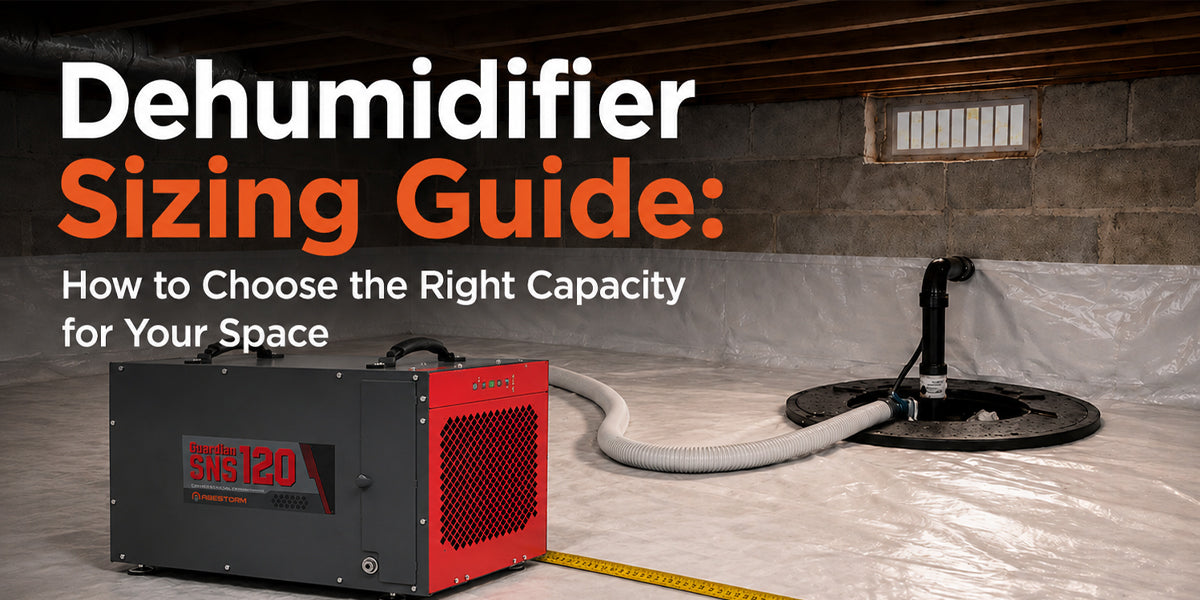
Crawl space dehumidifiers pull moisture out of the air and collect it in a tank or send it out through a drainage pipe. They control humidity directly, no matter what the outside air is doing.
These machines are specially designed to operate in small, tight, and sometimes cooler areas like crawl spaces.
Pros of Dehumidifiers:
- Actively remove moisture from the air.
- Work well in all climates, especially humid ones.
- Help reduce mold, odors, and wood damage.
- Can maintain consistent humidity levels year-round.
Cons of Dehumidifiers:
- Higher cost (usually $800–$1,600 for quality crawl space models).
- Require a drain line or pump setup.
- Need electricity and occasional maintenance.
- Don't provide air circulation (though some units include internal fans).
Fans vs. Dehumidifiers: Side-by-Side Comparison

When to Use Crawl Space Fans
Crawl space fans can be helpful in certain situations, but they're not for everyone.
Good choice if:
- You live in a dry climate (like the Southwest).
- Your crawl space has good drainage and no standing water.
- You want to improve airflow, not remove moisture.
- You're on a tight budget and already have open vents.
Not recommended if:
- You live in a humid area.
- Your crawl space is sealed or encapsulated.
- You notice mold, musty smells, or condensation.
When to Use Crawl Space Dehumidifiers
Dehumidifiers are the best solution in most wet or humid crawl spaces. They're especially important if you're sealing or encapsulating the area.
Use a dehumidifier if:
- Your crawl space feels damp, musty, or smells bad.
- You've noticed mold, mildew, or condensation.
- You live in a humid or coastal region.
- You're planning to encapsulate or already sealed off vents.、
Might not be necessary if:
- You live in a dry area with zero moisture problems.
- Your home is elevated, with lots of natural airflow.
Can You Use Both Together?
Yes sometimes, fans and dehumidifiers can be used together in a semi-sealed crawl space:
- The fan circulates air to prevent stale pockets.
- The dehumidifier handles moisture removal.
- Together, they create a more balanced environment.
However, this combo works best when:
- The crawl space is properly sealed (vapor barrier, insulation, etc.).
- You monitor humidity with a hygrometer.
- You install the fan in a way that doesn't bring in outside humid air.
Expert Tips for Crawl Space Moisture Control
Whether you choose a fan, dehumidifier, or both, follow these best practices:
- Install a vapor barrier (thick plastic sheet) on the ground to block soil moisture.
- Seal all vents and gaps to prevent outside humidity from entering.
- Fix drainage issues outside the home—keep water from pooling near the foundation.
- Use a hygrometer to track humidity levels (aim for 40–60%).
- Insulate crawl space walls or subfloor if needed.
- Regularly check for leaks, mold, or signs of pests.
Conclusion
So what works better in wet crawl spaces, fans or dehumidifiers? In most humid areas, dehumidifiers are the clear winner. They remove moisture from the air, protect your home from mold and rot, and create a healthier environment.
Fans can work in dry areas or as a supplement in semi-sealed crawl spaces, but they're not enough on their own if humidity is a real issue.
If you're serious about protecting your home’s structure, indoor air quality, and long-term value, controlling crawl space humidity isn't optional, it's essential. And in most cases, a good dehumidifier is the tool that gets the job done right.
Shop For Dehumidifier
Abestorm 180 PPD 2,300 Sq.Ft Commercial Dehumidifier with Pump and Drain Hose | Hurricane LGR85
Abestorm 190 PPD 2,600 Sq.Ft Commercial Dehumidifier with Pump and Drain Hose | Hurricane 900
Abestorm 170 PPD 2,100 Sq.Ft Commercial Dehumidifier with Pump and Drain Hose | Hurricane 800
Abestorm 180 PPD 2,300 Sq.Ft Commercial Dehumidifiers with Pump and Drain Hose | Hurricane 85P